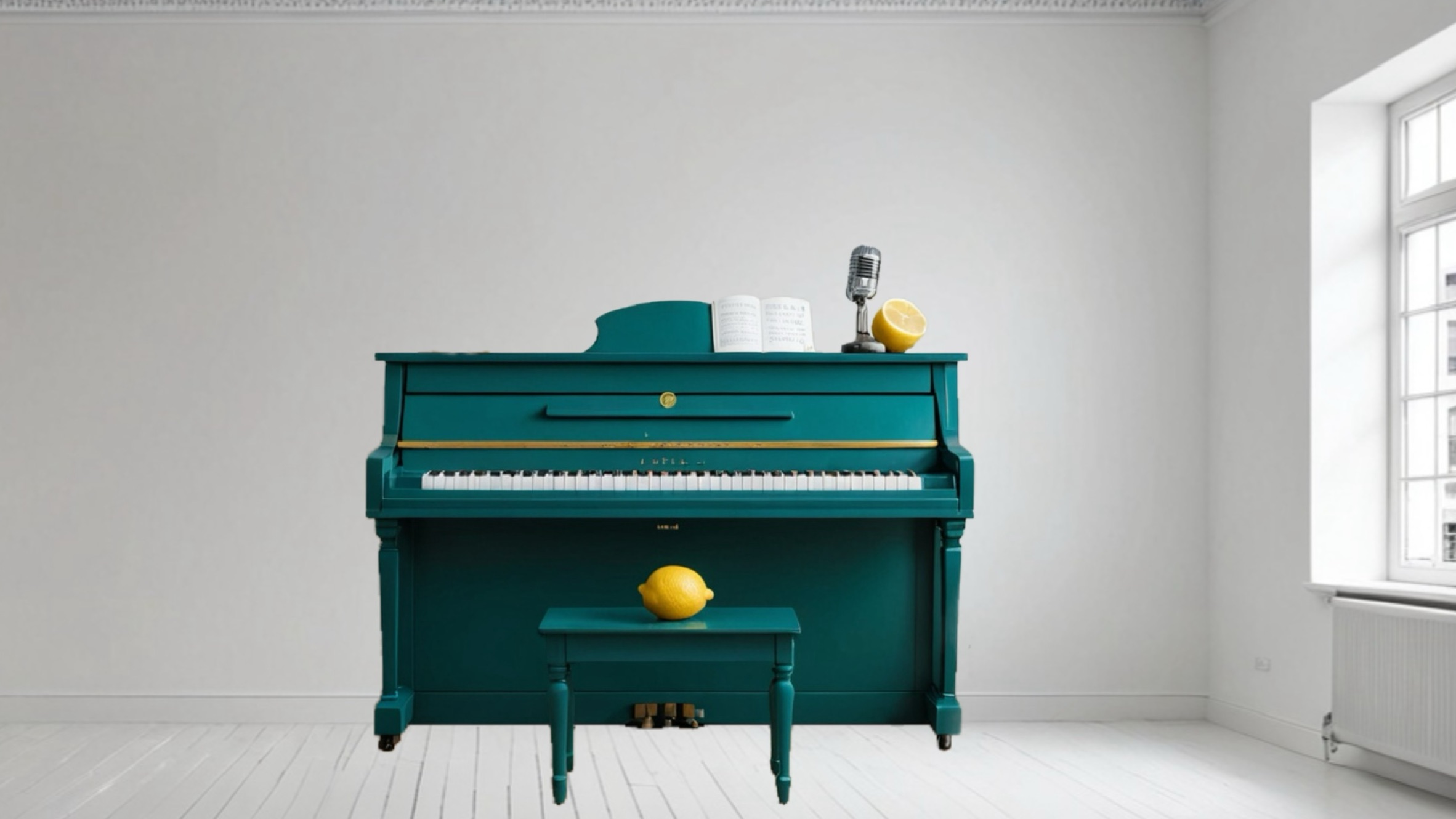
About 15 months ago, a subtle but profound shift occurred. Beyond the life-altering cancer diagnosis in 2019, a quieter, more unexpected change took root. Music, always a presence—I have vivid memories of drifting off to my mother’s piano playing—transformed from a mere background element into something essential for survival, a melody woven into the fabric of resilience. Initially, it was a practical tool to regain strength in my hands, battling severe neuropathy. But it has since blossomed into something far more profound: survival, beautifully articulated through melody and rhythm.
The Playlist That Knows Me Too Well
My phone now hosts a playlist that’s become central to my journey of learning to sing “properly.” These tracks are more than just songs; they’re deeply personal, therapeutically embedded parts of me. It’s a wonderfully eclectic collection, spanning decades and genres in a way that might appall music purists. Tracy Chapman’s “Fast Car” sits companionably next to Metallica’s “Nothing Else Matters.” Barbara Pravi’s “Voilà” flows into Green Day’s “American Idiot.” Frank Sinatra’s “The Best is Yet to Come” is nestled between Nirvana’s “Come as You Are” and Luis Fonsi’s “Despacito.”
Musora, the learning platform I began with for piano (Pianote brand) and have since expanded to singing (Singeo brand), presented a 30-day song challenge designed to build practice habits: learn one new song daily. I’ve embraced this, even sharing a couple of deeply resonant songs on my blog, such as This is Me! or Don’t Feel Sorry For Me. I Don’t. It’s only now, however, that I’m fully grasping the profound significance these musical choices hold for me.
The repertoire is a fascinating mix: country (Martina McBride’s “I’m Gonna Love You Through It”), musical theatre (“Hakuna Matata” from the Original Broadway Cast Recording of The Lion King), grunge (the iconic opening chords of “Come as You Are”), folk-rock (Leonard Cohen’s “Hallelujah” in all its soul-stirring glory), pop gospel (MJ’s “Man in the Mirror”), reggae (Bob Marley’s “Redemption Song”), and even rap (Eminem’s “Stan,” just to keep things interesting).
Logically, it’s a disparate collection. Yet, at 2 AM, when steroids disrupt my sleep and my mind races through worst-case scenarios at an Olympic pace, it makes perfect sense. It anchors me during the day, like when Jon is prepping his place for painting and I am not well enough to help him. It offers focus when side effects loom, diverting my attention from physical discomfort. Sometimes, it’s not even full songs—just getting lost in repeating Hanon exercises or scales. You’d think with the countless hours I’ve practiced them, often in the sleep-deprived quiet of late nights-turned-early mornings, I’d be much better. Oh, wait… perhaps that’s precisely why improvement remains elusive!
Living with cancer means your brain is in constant, relentless, exhausting processing mode. Music, however, carves out these essential pockets of “elsewhere.” It’s not an escape, but rather, much-needed breathing room.
How I Accidentally Became (or Am Becoming?) a Songwriter
The transformation didn’t stop at listening. I started creating music. It began subtly, almost unconsciously. My regular drives to and from the city and mountains became impromptu lyric-writing sessions, though I didn’t know it at the time. Words and short phrases would surface in my mind, and I started dictating them into my phone’s notes app. Eventually, my daughter noticed and asked what I was doing. My uncertain reply was that perhaps they were song titles. When she asked why I needed them, I admitted I didn’t know, but a quiet thought suggested I might be meant to write a song.
A few weeks later, a new course appeared on Singeo: “Songwriting Basics,” offered by Dani Strong. Despite never having considered myself a songwriter, I felt compelled to enroll. The initial module, “Finding Your Inspiration,” focused on listing power words and associations without judgment. To my surprise, I already had a substantial list from my drives—considerably easing that first step!
We progressed through the course, section by section: melody, verses, bridge, intro, outro, using those power words to craft cohesive phrases. Before I knew it, I had written my first song, “Paint My Canvas.” It had actual lyrics, a melody, and felt like a complete song. It was a genuine “Say what???” moment.
The challenge then became fitting my song to the provided backing tracks. After countless listens, I began matching my piano playing to the desired sound. This led to creating my own piano accompaniment, which I then pieced together. I was captivated by the results. Only afterward did I notice the key signature: three sharps (C♯, F♯, G♯). I had written my song in F major. Me, who once considered white keys to be enough for me to play. Another double “Say what???”
Next came the daunting task of notating my work. GarageBand struggled with the low register of my playing, often scoring notes in the bass clef and sometimes requiring more fingers than I possess. I searched for scoring software and meticulously entered each note in the correct clef. Then came the scary part: ledger lines that I couldn’t quickly decipher. At least not without counting the notes going below the staff. Compounding this, my verses featured a swing rhythm, shifting to triplets in the choruses—annotating this was beyond my then-current understanding. The Musora Pianote community provided invaluable help. My music mentor offered excellent suggestions, and fellow musicians (can I truly call myself a musician when I’m still a beginner?) provided constructive feedback. Now, I have sheet music I can actually read without frantically counting ledger lines and writing the note beside it.
As I incorporated their feedback, my song evolved into Version 3. Recording the accompaniment while navigating chemo-brain fog—a challenge I can’t overstate—led to new creative options. Jon became my sounding board, helping me choose between them when I felt conflicted. All this because of an unexpected decision that underscores a curious response to life’s challenges: acquiring new skills while your body is actively working against you. The piece has now undergone four iterations, evolving alongside my own changes—a process that feels both poetic and perhaps a bit on-the-nose.
I ended up recording the piano for my backing track on a tough day. The lingering effects of the previous day’s chemo were intense. I was exhausted to my core, to the point where thinking felt like wading through concrete. I had to edit out multiple chemo-brain moments from the video– those instances where your fingers simply… forget. The connection between intention and execution becomes a frustrating blur.
But I persevered. I finished it. There was no deadline for me, so I could have recorded it any other day. I can’t explain it, but it was something I needed to do at that moment. And now, something exists in the world that didn’t before, something born from me amidst this significant challenge.
The vocals will follow, once I’ve recovered and completed a couple of pieces for the program’s monthly cross-collaboration song. So, I have only recorded the piano. It’s not perfect. I already know I want to re-record it. But honestly, it feels like enough. And I am proud of that. For now.
Science Confirms My Accidental Therapy
While my full-time job now as a “professional” terminal cancer patient involves frequent doctor’s appointments, labs and treatments every three weeks, scans every nine weeks, and consultations with more specialists that I can keep track of, I sometimes feel like an amateur expert on my specific cancer type. However, I am not a doctor. My medical team likely appreciates this distinction. It turns out there’s robust research supporting the benefits of what I stumbled into through necessity.
A study published in Journal of Pain & Symptom Management (2021)[1] revealed that music therapy significantly reduced anxiety and enhanced the quality of life for cancer patients undergoing chemotherapy. The researchers noted that engaging with music, whether listening or creating, aided patients in processing emotions and provided a crucial sense of control in overwhelmingly uncontrollable circumstances. Another recent study published in Supportive Care in Cancer (2023),[2] patients advanced cancer found that actively making music during therapy sessions helped participants feel more in control of their pain, reduced their reliance on medication, and improved their emotional well-being.
What resonates deeply with me about this research is its lack of grand claims about curing cancer. It’s not presented as a miracle cure, but rather as a valuable support. It creates space. It occupies your brain, diverting it from catastrophizing. It allows for the expression of things that defy ordinary conversation.
How else can you explain that learning “All of Me” by John Legend on the piano feels like reclaiming a small piece of personal agency? Or that stumbling through “Hallelujah” while battling chemo-brain fog feels less like failure and more like an honest testament to resilience? You can’t, really. But you can make music with it. And somehow, that act is enough.
The Chemo-Brain Sessions
There’s a darkly humorous aspect to attempting artistic creation while your brain is actively malfunctioning. You sit at the piano, fingers poised, and for a disorienting moment, you genuinely can’t recall what comes next in a piece you composed yourself. It requires stopping, resetting, and trying again. And again. And sometimes, you just roll with it and edit those mistakes out later, and you share them with your music community—what else are you going to do? Pretend it isn’t difficult? Pretend you’re functioning at full capacity?
The profound beauty—and I use that word cautiously—is that the music itself is indifferent to your chemo-brain. It doesn’t judge the errors. It simply waits for you to find your way back. And when you do, when your fingers finally reconnect with their intended path, there’s a small, potent victory. It has nothing to do with cancer and everything to do with the simple act of… doing something. Creating something. Being something other than a “terminal cancer patient” for a few precious minutes.
What I’m Learning (Besides Piano and Singing)
Fifteen months into this journey, I’m still deciphering its full meaning. But here’s what I’ve come to understand:
Music has become my anchor when other activities are challenging. When side effects become overwhelming, when anxiety escalates, when I need to reconnect with my sense of self beyond symptoms and treatment schedules—I practice. I work through that delightfully eclectic playlist. I tinker with “Paint My Canvas.” I make mistakes, correct them, and sometimes, make them again.
Slowly, song by song, checkmark by checkmark, I’m building something more than just a repertoire or a skill set. I’m constructing a pathway through this experience. A way to process events without needing to articulate everything in words. A method to feel productive when my body seems determined to do the opposite.
The vocals for “Paint My Canvas” will arrive in time. I hope to first record and submit this month’s cross-collab songs. The playlist will continue to expand. And somewhere within all of it, I’ll keep discovering those pockets of breathing room—those moments where cancer recedes into the background noise, and the music takes centre stage.
It turns out, therapy doesn’t always require a couch.
Sometimes, it happens by humming a melody, dictating words into your phone, using those words and turning them into phrases, or by plunking at the notes of your piano, chemo-brain and all.
Listen to “Paint My Canvas” below. (This video has been updated since the original blog post was written. The original post only included the piano solo. I have finally recorded the lyrics and re-recorded the piano accompaniment and merged them together in this video.
If you’ve enjoyed my blog post and feel you would like to contribute towards my music lessons—or my musical therapy—you can do so here!
[1] Mondanaro, J. F., Sara, G. A., Thachil, R., Pranjić, M., Rossetti, A., EunHye Sim, G., Canga, B., Harrison, I. B., & Loewy, J. V. (2021). The effects of clinical music therapy on resiliency in adults undergoing infusion: A randomized, controlled trial. Journal of Pain and Symptom Management, 61(6), 1099–1108. https://doi.org/10.1016/j.jpainsymman.2020.10.032
[2] Trigueros-Murillo, A., Martinez-Calderon, J., Casuso-Holgado, M. J., González-García, P., & Heredia-Rizo, A. M. (2023). Effects of music-based interventions on cancer-related pain, fatigue, and distress: An overview of systematic reviews. Supportive Care in Cancer, 31(8). https://doi.org/10.1007/s00520-023-07938-6
another unditected talent came to light WOW
Thanks Magda. I’m not quite sure it’s a talent yet, but I’m really enjoying the process of learning and surprisingly making music. 😀
Love it !💕And the dog entering the frame and curling up to nap shows the energy. So peaceful but joyful. Natalie you are talented.
I laugh because he kept leaving while I was practicing and getting frustrated. He must have sensed I was calmer for the video part.